
Lesson 8
THE LAMB
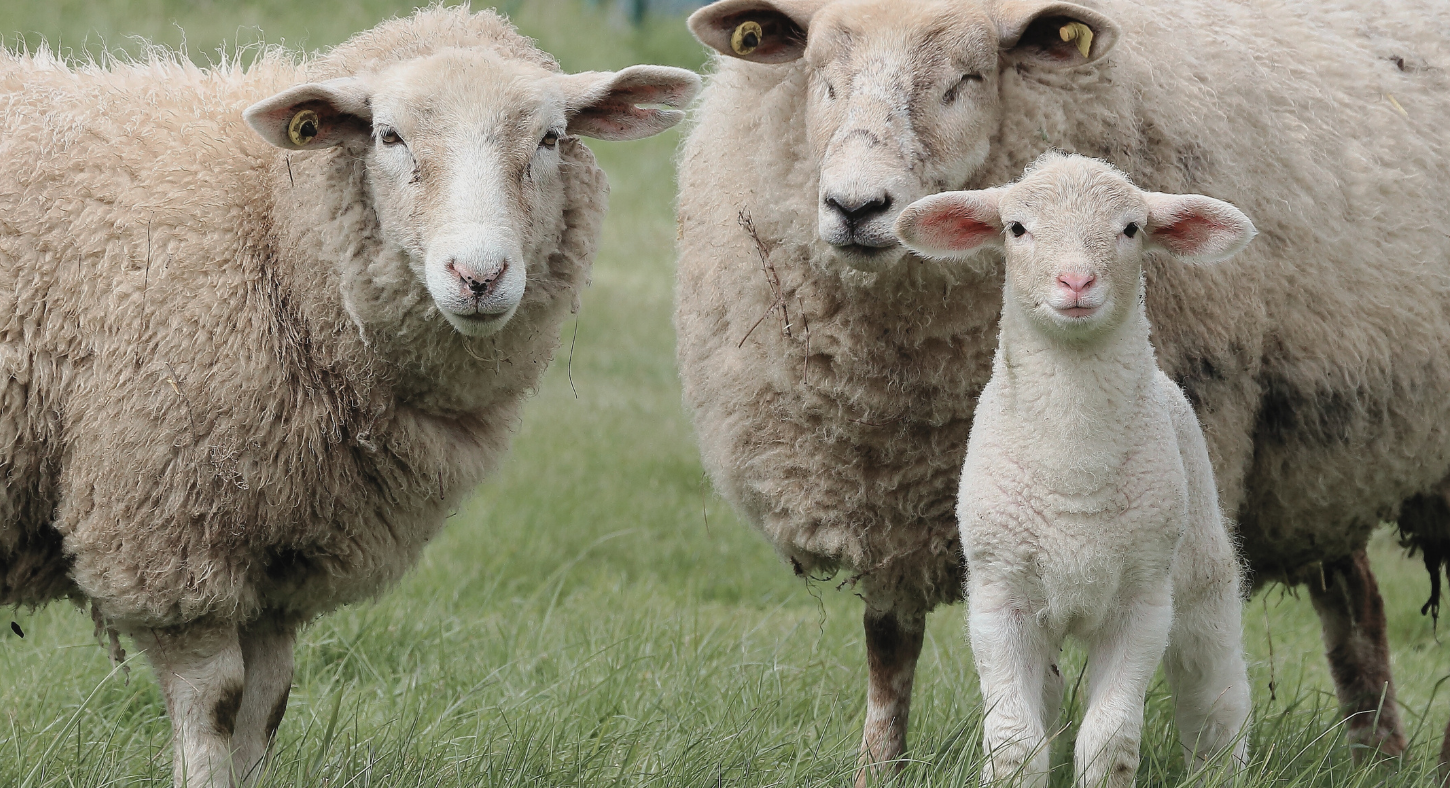
Table of Contents
– The Door – Review
– The Shepherd – Review
– The Lamb
– The Son of God
Scriptures Cited: John 10:1-18, Acts 1:20, Acts 1:16, Acts 2:38, Acts 20:28, John 20:28, Psalm 23, 1 Timothy 3:16, 1 Peter 1:18-19, John 15:12-15, Hebrews 2:9-12, Hebrews 4:14-15, John 1:10-14, John 1:29, Matthew 16:15-18, Mark 16:15-16, 1 Timothy 2:5
This lesson is the conclusion of the three-part series focusing on the parable that Jesus gives in John chapter 10. Before we begin, we will briefly review the previous two lessons, adding a few more supporting scriptures to the points made.
THE DOOR – REVIEW
The whole set of scriptures that we are looking at for these lessons, is from John chapter 10 verse 1 through 18, each lesson focusing on a particular aspect of this parable. Let’s start by looking at the first portion of the parable that we read during The Door lesson.
John 10:1-9
1 Verily, verily, I say unto you, He that entereth not by the door into the sheepfold, but climbeth up some other way, the same is a thief and a robber. 2 But he that entereth in by the door is the shepherd of the sheep. 3 To him the porter openeth; and the sheep hear his voice: and he calleth his own sheep by name, and leadeth them out. 4 And when he putteth forth his own sheep, he goeth before them, and the sheep follow him: for they know his voice.
5 And a stranger will they not follow, but will flee from him: for they know not the voice of strangers. 6 This parable spake Jesus unto them: but they understood not what things they were which he spake unto them. 7 Then said Jesus unto them again, Verily, verily, I say unto you, I am the door of the sheep. 8 All that ever came before me are thieves and robbers: but the sheep did not hear them.
9 I am the door: by me if any man enter in, he shall be saved, and shall go in and out, and find pasture.
The obvious focus here is when Jesus tells us “I am the door”. But rather than focusing on the common way that this is looked at (as Jesus being the entrance or the way that we get to God), we focused more on verse 2, where it says “but he that entereth in by the door is the shepherd of the sheep”, this showing us that not only is Jesus our way to God, but He is also the way that God speaks to us.
Jesus is saying here that He is the Door, and the Shepherd comes through Him to address the sheep… and we looked at some scriptures that pointed out the way God has previously spoken to us. Going a little bit deeper, it has actually always been through His Spirit. It is the way that God speaks to us. When Jesus tells us that He is the Door, He is speaking from the perspective of that same Spirit.
And just to add another little piece to that puzzle let’s go to Acts chapter 1, where Peter referenced the book of Psalms when the apostles were casting lots to appoint a replacement for Judas.
Acts 1:20
20 For it is written in the book of Psalms, Let his habitation be desolate, and let no man dwell therein: and his bishoprick let another take.
This is another scripture that can be connected to the same theme of the sheep/shepherd, because ‘bishop’ is another term for an overseer, just as shepherds care for their flock. But what I wanted to point out here is, it says ‘it is written in the book of Psalms’ – and we all know who wrote the book of Psalms, and that would be David – King David, or in this case ‘David the prophet’. But, if we go back up a few verses to Acts 1:16, we see it says:
Acts 1:16
16 Men and brethren, this scripture must needs have been fulfilled, which the Holy Ghost by the mouth of David spake before concerning Judas, which was guide to them that took Jesus.
So this is another example of the way that God speaks to us – even though it came through David, it was really the Holy Ghost that was speaking, or the Holy Spirit speaking through the mouth of David. It lets us know that when we read what the prophets have said, whether it be David, or even Jesus Himself – they all spoke by the One Spirit of God. And that is why it is important when we hear the scripture, to not only hear what is said – but also to listen for who is saying it.
So when we look at Acts 2:38 where Peter gave the first gospel message – do we hear the words of Peter, do we hear the words of Luke – the one who authored the book, or are we able to hear the voice of God speaking through and by the Holy Spirit, which is what the Bible tells us is actually the case.
THE SHEPHERD – REVIEW
In the second lesson, “The Shepherd“, we focused on verses 10-14 in John chapter 10. After Jesus has already told us ‘I am the door’ and ‘the shepherd comes through the door to talk to the sheep’ He then goes on to tell us that He is the good shepherd.
John 10:10-14
10 The thief cometh not, but for to steal, and to kill, and to destroy: I am come that they might have life, and that they might have it more abundantly.
11 I am the good shepherd: the good shepherd giveth his life for the sheep.12 But he that is an hireling, and not the shepherd, whose own the sheep are not, seeth the wolf coming, and leaveth the sheep, and fleeth: and the wolf catcheth them, and scattereth the sheep. 13 The hireling fleeth, because he is an hireling, and careth not for the sheep.
14 I am the good shepherd, and know my sheep, and am known of mine. 15 As the Father knoweth me, even so know I the Father: and I lay down my life for the sheep. 16 And other sheep I have, which are not of this fold: them also I must bring, and they shall hear my voice; and there shall be one fold, and one shepherd.
This could almost seem like a contradiction, with Jesus first telling us that He is the door (The Spirit), and now telling us that He is the good shepherd (God).
In the second lesson we looked at scriptures which showed us that Jesus is God; for example, Acts 20:28, where the apostle Paul is talking about the church of God, which He purchased with His own blood. We also looked at the testimony of Thomas in John 20:28, where he was doubting whether Jesus had actually risen. Jesus came and showed Himself to Thomas, and his response to Jesus was ‘my Lord and my God’. We concluded that lesson with Psalm 23: ‘The LORD is my shepherd’, where we pointed out that in verse 1, the word LORD in the original text is actually ‘Jehovah’ or YHWH. When read with that understanding, the verse says: ‘Jehovah is my shepherd‘. Together with Jesus telling us ‘I am the good shepherd’, we get a deeper understanding of who Jesus is.
Adding one more piece to that understanding, we can go to 1 Timothy 3:16 – which also lets us know that Jesus is actually God:
1 Timothy 3:16
16 And without controversy great is the mystery of godliness: God was manifest in the flesh, justified in the Spirit, seen of angels, preached unto the Gentiles, believed on in the world, received up into glory.
This is one more example of how the good Shepherd came to gather His sheep. These are just a few of the many verses, which give us deeper revelation of who Jesus is.
THE LAMB
Now that we have reviewed the last two lessons, adding further revelation, we are going to finish up the last portion of the parable in John chapter 10. We’ve seen Jesus say that He is the door, and we’ve seen Him say that He is the shepherd. He continues in verse 17 by saying:
John 10:17-18
17 Therefore doth my Father love me, because I lay down my life, that I might take it again. 18 No man taketh it from me, but I lay it down of myself. I have power to lay it down, and I have power to take it again. This commandment have I received of my Father.
As Jesus tells us about Himself as the good shepherd, He adds that He will lay down His life for the sheep. This sacrifice brings us to another aspect of who Jesus is… the Lamb.
Throughout this parable in John chapter 10, it is commonly understood that we are depicted as His sheep. And though Jesus is the shepherd, there is also an aspect of His sacrifice that required Him to be as one of the sheep.
1 Peter 1:18-19
18 Forasmuch as ye know that ye were not redeemed with corruptible things, as silver and gold, from your vain conversation received by tradition from your fathers; 19 But with the precious blood of Christ, as of a lamb without blemish and without spot:
Let’s now go to John chapter 15 and we will look at what Jesus has to say about this same sacrifice as He is speaking to His apostles. This conversation took place right before His arrest and crucifixion. In verse 12, He says:
John 15:12- 15
12 This is my commandment, That ye love one another, as I have loved you. 13 Greater love hath no man than this, that a man lay down his life for his friends. 14 Ye are my friends, if ye do whatsoever I command you.
15 Henceforth I call you not servants; for the servant knoweth not what his lord doeth: but I have called you friends; for all things that I have heard of my Father I have made known unto you.
We see Jesus here talking about this sacrifice that He is going to make, and He says that there is no greater love that any man can have, than to lay down his life for his friends. And He lets us know that those whom He lays His life down for, are His friends. What I really want to point out is that in this sacrifice, Jesus comes down to our level. He is one of us, He is a friend laying down His life for His friends.
So continuing in this same direction, let’s look at the book of Hebrews where this is stated similarly, but will give us further understanding. Focusing on Jesus’ sacrifice and His relationship to us, Hebrews 2:9-12 reads:
Hebrews 2:9-12
9 But we see Jesus, who was made a little lower than the angels for the suffering of death, crowned with glory and honour; that he by the grace of God should taste death for every man. 10 For it became him, for whom are all things, and by whom are all things, in bringing many sons unto glory, to make the captain of their salvation perfect through sufferings.
11 For both he that sanctifieth and they who are sanctified are all of one: for which cause he is not ashamed to call them brethren, 12 Saying, I will declare thy name unto my brethren, in the midst of the church will I sing praise unto thee.
So here we see that Jesus was made a little lower than the angels for the purpose of suffering death – which was His sacrifice for us. And here He is called the ‘captain of our salvation’. Thinking of what a captain actually is, for example – in the military the captain is the leader, but he is also one of the soldiers. Or if we think about the captain of a football team, he might be the leader of the team, but he is also a player. He is the one player who is the captain.
As the captain of our salvation, through His suffering we now have a way to be made brethren with Him. And as brethren with Him, we are able to see that He is one of us, showing His willingness to be on ‘our level’. That is really the main focus of this lesson.
We could even look in Hebrews chapter 4 verse 14 where it says it again.
Hebrews 4:14-15
14 Seeing then that we have a great high priest, that is passed into the heavens, Jesus the Son of God, let us hold fast our profession.15 For we have not an high priest which cannot be touched with the feeling of our infirmities; but was in all points tempted like as we are, yet without sin.
So once again we see that Jesus here is called the High Priest. And like our other examples, if we think about what a High Priest is – even though He is elevated, He is still one of the people. It also lets us know that He can feel our sufferings and understands, because He is one of us.
So if we go back to the book of John in chapter 1, we will see it stated one other way.
John 1:10-14
10 He was in the world, and the world was made by him, and the world knew him not. 11 He came unto his own, and his own received him not. 12 But as many as received him, to them gave he power to become the sons of God, even to them that believe on his name: 13 Which were born, not of blood, nor of the will of the flesh, nor of the will of man, but of God. 14 And the Word was made flesh, and dwelt among us, (and we beheld his glory, the glory as of the only begotten of the Father,) full of grace and truth.
Here we see the Word made flesh, becoming one of us. God in the flesh. Even when we think of the the prophesy that His name shall be called Emmanuel, meaning ‘God with us’, once again… God became one of us.
And just a few verses further, we get to see the testimony of John the Baptist when he saw Jesus. What did he see? He saw a man coming to be baptized, but reading the verse below, we see how John describes this man.
John 1:29
29 The next day John seeth Jesus coming unto him, and saith, Behold the Lamb of God, which taketh away the sin of the world.
With this testimony of John the Baptist, it brings us back into the theme of these lessons by showing us that not only is Jesus the Door and the Shepherd, but He is also one of the sheep. The Lamb of God. And He being the Lamb of God, and we the sheep… it shows us once again that He really is one of us – but the only One who is pure and sinless. The One who sacrificed Himself, that we might have salvation, that we might have a way to the Father.
THE SON OF GOD
Taking all of this into consideration, we see that just because Jesus is the shepherd, it does not that mean He is not the lamb. Just because He is the King of Kings does not mean that He is not the door. There are lots of things that Jesus is, but when Peter was asked “But whom say ye that I am?”, the rock that the church would be built on is: Jesus is the Son of God.
He sacrificed Himself for us, He was crucified, He suffered, He died, He was buried, and He was raised for our justification. He was raised that we might have forgiveness of sin and a Way to the Father. This is the gospel. In Mark 16:15, the apostles were told to go into all the world and preach this gospel.
But how does that relate to us as the sheep? Or more importantly, how does that relate to you? How do we accept what Jesus has done for us? Continuing to Mark 16:16, Jesus says concerning the gospel:
Mark 16:16
16 He that believeth and is baptized shall be saved; but he that believeth not shall be damned.
This is the way that we come to God. As the Holy Ghost also spoke through Peter in Acts 2:38, if we believe this gospel we repent, we turn from ourselves and our sins, coming to God by being baptized in the name of His son Jesus Christ for the remission of our sins.
By coming to God in faith and obedience, He has promised to give us His Holy Spirit to live with us and keep us from now and through eternity. So if you are someone who has not come to God in the way that He prescribed in His scripture, but have a desire to do so, contact us by clicking here and we will help you to obey the gospel.
1 Timothy 2:5
5 For there is one God, and one mediator between God and men, the man Christ Jesus;
 HisWay